"But in the end, it's only a passing thing, this shadow. Even darkness must pass. A new day will come, and when the sun shines it will shine out the clearer."
- Sam Gamgee from The Two Towers
In western lands beneath the sun
The flowers may rise in spring
The trees may bud, the waters run
The merry finches sing.
Or maybe there 'tis cloudless night
And swaying beeches bear
The Elven-stars as jewels white
Amid their branching hair.
Though here at journey's end I lie
In darkness buried deep,
Beyond all towers strong and high,
beyond all mountains steep,
Above all shadows rides the Sun
The Stars forever dwell
I will not say the Day is done
Nor bid the Stars farewell.
- Samwise Gamgee from The Return of the King
A new day will come, and when the sun shines, it will shine out the clearer!
July 31, 2007

July 25, 2007
Argynis pandora (Cardinal)

This is the prize butterfly I have been trying to photograph for awhile. It is not quite as pretty as my Scarce Swallowtail, but I think it has second place on the list. It has a strong flight, and I was never able to take it before. It is very large, and I thought that the patterns on both sides are quite unique. What's more, it was extremely cooperative when I tried to photograph it!


This one is rather blurry but if you look closely you can see the butterfly's proboscis slightly extended.
 Take a look at those green eyes!
Unidentified Blue
 Found in Black Sea region. I am not 100% sure of this identification. I know that it is some kind of blue, and I have researched the butterfly and the Vogel's Blue, (below) resembles it closely. However, if you look carefully, you can see that the black markings on the side of the wing differ considerably.
 (Picture taken from eurobutterflies.com)
The Spalding's Dotted-Blue (Euphilotes spaldingi) (below) is a more probable possibility. I could not find another picture of it, though, and I am not sure if this one is very dependable, as it has a reddish light to it, which is probably film lighting, but could be the natural color of the butterfly.
 (Picture taken from butterfliesandmoths.org)
July 21, 2007
The Death of the Gods
I heard a voice, that cried,
"Balder the Beautiful
Is dead, is dead!"
And through the misty air
Passed like the mournful cry
Of sunward sailing cranes.
I saw the pallid corpse
Of the dead sun
Borne through the Northern sky.
Blasts from Niffelheim
Lifted the sheeted mists
Around him as he passed.
And the voice forever cried,
"Balder the Beautiful
Is dead, is dead!"
And died away
Through the dreary night,
In accents of despair.
Balder the Beautiful,
God of the summer sun,
Fairest of all the Gods!
Light from his forehead beamed,
Runes were upon his tongue,
As on the warrior's sword.
All things in earth and air
Bound were by magic spell
Never to do him harm;
Even the plants and stones;
All save the mistletoe,
The sacred mistletoe!
Hoeder, the blind old God,
Whose feet are shod with silence,
Pierced through that gentle breast
With his sharp spear, by fraud
Made of the mistletoe,
The accursed mistletoe!
They laid him in his ship,
With horse and harness,
As on a funeral pyre.
Odin placed
A ring upon his finger,
And whispered in his ear.
They launched the burning ship!
It floated far away
Over the misty sea,
Till like the sun it seemed,
Sinking beneath the waves.
Balder returned no more!
So perish the old Gods!
But out of the sea of Time
Rises a new land of song,
Fairer than the old.
Over its meadows green
Walk the young bards and sing.
Build it again,
O ye bards,
Fairer than before!
Ye fathers of the new race,
Feed upon morning dew,
Sing the new Song of Love!
The law of force is dead!
The law of love prevails!
Thor, the thunderer,
Shall rule the earth no more,
No more, with threats,
Challenge the meek Christ.
From Tegner's Drapa
by Henry W. Longfellow
"Balder the Beautiful
Is dead, is dead!"
And through the misty air
Passed like the mournful cry
Of sunward sailing cranes.
I saw the pallid corpse
Of the dead sun
Borne through the Northern sky.
Blasts from Niffelheim
Lifted the sheeted mists
Around him as he passed.
And the voice forever cried,
"Balder the Beautiful
Is dead, is dead!"
And died away
Through the dreary night,
In accents of despair.
Balder the Beautiful,
God of the summer sun,
Fairest of all the Gods!
Light from his forehead beamed,
Runes were upon his tongue,
As on the warrior's sword.
All things in earth and air
Bound were by magic spell
Never to do him harm;
Even the plants and stones;
All save the mistletoe,
The sacred mistletoe!
Hoeder, the blind old God,
Whose feet are shod with silence,
Pierced through that gentle breast
With his sharp spear, by fraud
Made of the mistletoe,
The accursed mistletoe!
They laid him in his ship,
With horse and harness,
As on a funeral pyre.
Odin placed
A ring upon his finger,
And whispered in his ear.
They launched the burning ship!
It floated far away
Over the misty sea,
Till like the sun it seemed,
Sinking beneath the waves.
Balder returned no more!
So perish the old Gods!
But out of the sea of Time
Rises a new land of song,
Fairer than the old.
Over its meadows green
Walk the young bards and sing.
Build it again,
O ye bards,
Fairer than before!
Ye fathers of the new race,
Feed upon morning dew,
Sing the new Song of Love!
The law of force is dead!
The law of love prevails!
Thor, the thunderer,
Shall rule the earth no more,
No more, with threats,
Challenge the meek Christ.
From Tegner's Drapa
by Henry W. Longfellow
July 20, 2007
Colias Lepidoptera (Unidentified)

 My young brother caught this butterfly for me yesterday. It is evidently some kind of Colias, but I am not sure what kind and, as yet, I have been unable to identify it. Because of the color of its wings and the familiar white and brown markings in the center, it identifies itself as some kind of clouded butterfly. Most likely a clouded yellow, but I do not know what specific species. If anyone knows what species it is, I would be glad to hear.
It looks very much like a Colias aurorina (Greek clouded butterfly) that I posted some time ago, but it does not have the yellow color that the other posseses. The unique patterns on its closed wings are evident in the picture, but it has a fairly strong flight, and I was unable to take a good picture of its open wings. I have heard that these are hard to photograph with open wings. There is one below, but it is rather blurry. When its wings are open, the upper ones are white with a small black spot in the center and wide black edges that have at least two small white markings, and one pale yellow marking. I was unable to closely examine the lower wings due to the butterfly's constant flight, but I could see that the lower wings are also white, with black edges that contain a fairly large orange marking and at least two small white ones.

July 18, 2007
Underneath the Surface
 Yesterday I found a hollyhock on the roadside. It had grown there on it's own, and it was not planted or cared for by anyone. But it has become one of the awesome wonders of nature. Lets get a closer look.
 Its rather wilted on the edges, but the splendor of the color is evident. Lets look under the surface, a little deeper.
 Now it no longer looks wilted, but the color and the symmetry of the lines give it a beautiful appearance. A little deeper.
 It isn't a dusty little flower by the roadside anymore. The cloudy, pale color at the very middle of the flower, getting darker and stronger as it goes further. The lines are all perfectly placed. The pearly green and the light, pale pollen in the center give a finishing touch. It looks like mother-of-pearl inside. Use your imagination and picture it as a fairy tree from the Midsummer Night's Dream with yellow leaves. There are so many words we can describe it with. Beautiful, fantastic, awesome. The true character of the flower is underneath the surface. This is normally missed, and we only see the surface. But when you get underneath the surface, the whole world changes. We too often pass the details over and miss the real picture. I think that whoever named this flower 'hollyhock' must have not looked very far beneath the surface. It deserves a much more romantic name that echoes its true beauty. But I suppose there isn't anything we can do about that except try to find the other side of everything ourselves.
July 13, 2007
Bond and Free
Love has earth to which she clings
With hills and circling arms about
Wall within wall to shut fear our
But Thought has need of no such things
For Thought has a pair of dauntless wings.
On snow and sand and turf I see
Where Love has left a printed trace
With straining in the world’s embrace.
And such is Love and glad to be
But Thought has shaken his ankles free.
Thought cleaves the interstellar gloom
And sits in Sirius’ disc all night,
Till day makes him retrace his flight,
With smell of burning on every plume,
Back past the sun to an earthly room.
His gains in heaven are what they are.
Yet some say Love by being thrall
And simply staying possesses all
In several beauty that Thought fares far
To find fused in another star.
~Robert Frost
With hills and circling arms about
Wall within wall to shut fear our
But Thought has need of no such things
For Thought has a pair of dauntless wings.
On snow and sand and turf I see
Where Love has left a printed trace
With straining in the world’s embrace.
And such is Love and glad to be
But Thought has shaken his ankles free.
Thought cleaves the interstellar gloom
And sits in Sirius’ disc all night,
Till day makes him retrace his flight,
With smell of burning on every plume,
Back past the sun to an earthly room.
His gains in heaven are what they are.
Yet some say Love by being thrall
And simply staying possesses all
In several beauty that Thought fares far
To find fused in another star.
~Robert Frost
July 12, 2007
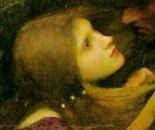
La Belle Dame sans Merci
 (La Belle Dame sans Merci, by William Waterhouse)
O, what can ail thee, Knight at arms,
Alone and palely loitering;
The sedge is wither’d from the lake
And no birds sing.
O, what can ail thee, Knight at arms,
So haggard and so woe-begone?
The squirrel’s granary is full,
And the harvest’s done.
I see a lily on thy brow,
With anguish moist and fever dew;
And on they cheek a fading rose
Fast withereth too.
I met a Lady in the Meads
Full beautiful, a fairy’s child;
Her hair was long, her foot was light
And her eyes were wild
I made a Garland for her head,
And bracelets too, and fragrant Zone;
She look’d at me as she did love,
And made sweet moan.
I set her on my pacing steed
And nothing else saw all day long;
For sideways would she lean, and sing
A faery’s song.
She found me roots of relish sweet,
And honey wild, and manna dew;
And sure in language strange she said,
“I love thee true.”
She took me to her elfin grot,
And there she wept and sighed full sore,
And there I shut her wild sad eyes
With kisses four.
And there she lulled me asleep
And there I dream’d, ah woe betide,
The latest dream I ever dreamt
On the cold hillside.
I saw pale Kings, and Princes too
Pale warriors, death-pale were they all;
Who cried, ‘La belle dame sans merci
Hath thee in thrall!”
I saw their starved lips in the gloam
With horrid warning gaped wide,
And I awoke and found me here
On the cold hill side.
And this is why I sojourn here,
Alone a palely loitering;
Though the sedge is wither’d from the lake,
And no birds sing.
~John Keats
Alone and palely loitering;
The sedge is wither’d from the lake
And no birds sing.
O, what can ail thee, Knight at arms,
So haggard and so woe-begone?
The squirrel’s granary is full,
And the harvest’s done.
I see a lily on thy brow,
With anguish moist and fever dew;
And on they cheek a fading rose
Fast withereth too.
I met a Lady in the Meads
Full beautiful, a fairy’s child;
Her hair was long, her foot was light
And her eyes were wild
I made a Garland for her head,
And bracelets too, and fragrant Zone;
She look’d at me as she did love,
And made sweet moan.
I set her on my pacing steed
And nothing else saw all day long;
For sideways would she lean, and sing
A faery’s song.
She found me roots of relish sweet,
And honey wild, and manna dew;
And sure in language strange she said,
“I love thee true.”
She took me to her elfin grot,
And there she wept and sighed full sore,
And there I shut her wild sad eyes
With kisses four.
And there she lulled me asleep
And there I dream’d, ah woe betide,
The latest dream I ever dreamt
On the cold hillside.
I saw pale Kings, and Princes too
Pale warriors, death-pale were they all;
Who cried, ‘La belle dame sans merci
Hath thee in thrall!”
I saw their starved lips in the gloam
With horrid warning gaped wide,
And I awoke and found me here
On the cold hill side.
And this is why I sojourn here,
Alone a palely loitering;
Though the sedge is wither’d from the lake,
And no birds sing.
~John Keats
July 7, 2007
The Lady of Shallot

(The Lady of Shallot, by William Waterhouse)
On either side of the river lie
Long fields of barley and of rye,
That clothe the wold and meet the sky;
And through the field the road runs by
To many-towered Camelot;
And up and down the people go,
Gazing where the lilies blow
Round an island there below,
The island of Shalott.
Willows whiten, aspens quiver,
Little breezes dusk and shiver
Through the wave that runs for ever
By the island in the river
Flowing down to Camelot.
Four gray walls, and four gray towers,
Overlook a space of flowers,
And the silent isle imbowers
The Lady of Shalott.
By the margin, willow veiled
Slide the heavy barges trailed
By slow horses; and unhailed
The shallop flitteth silken-sailed
Skimming down to Camelot:
But who hath seen her wave her hand?
Or at the casement seen her stand?
Or is she known in all the land,
The Lady of Shalott?
Only reapers, reaping early
In among the bearded barley,
Hear a song that echoes cheerly
From the river winding clearly,
Down to towered Camelot:
And by the moon the reaper weary,
Piling sheaves in uplands airy,
Listening, whispers "'Tis the fairy
Lady of Shalott."
There she weaves by night and day
A magic web with colours gay.
She has heard a whisper say,
A curse is on her if she stay
To look down to Camelot.
She knows not what the curse may be,
And so she weaveth steadily,
And little other care hath she,
The Lady of Shalott.
And moving through a mirror clear
That hangs before her all the year,
Shadows of the world appear.
There she sees the highway near
Winding down to Camelot:
There the river eddy whirls,
And there the curly village-churls,
And the red cloaks of market girls,
Pass onward from Shalott.
Sometimes a troop of damsels glad,
An abbot on an ambling pad,
Sometimes a curly shepherd-lad,
Or long-haired page in crimson clad,
Goes by to towered Camelot;
And sometimes through the mirror blue
The knights come riding two and two:
She hath no loyal knight and true,
The Lady of Shalott.
But in her web she still delights
To weave the mirror's magic sights,
For often through the silent nights
A funeral, with plumes and lights
And music, went to Camelot:
Or when the moon was overhead,
Came two young lovers lately wed;
"I am half sick of shadows," said
The Lady of Shalott.

A bow-shot from her bower-eaves,
He rode between the barley-sheaves,
The sun came dazzling through the leaves,
And flamed upon the brazen greaves
Of bold Sir Lancelot.
A red-cross knight for ever kneeled
To a lady in his shield,
That sparkled on the yellow field,
Beside remote Shalott.
The gemmy bridle glittered free,
Like to some branch of stars we see
Hung in the golden Galaxy.
The bridle bells rang merrily
As he rode down to Camelot:
And from his blazoned baldric slung
A mighty silver bugle hung,
And as he rode his armour rung,
Beside remote Shalott.
All in the blue unclouded weather
Thick-jewelled shone the saddle-leather,
The helmet and the helmet-feather
Burned like one burning flame together,
As he rode down to Camelot.
As often through the purple night,
Below the starry clusters bright,
Some bearded meteor, trailing light,
Moves over still Shalott.
His broad clear brow in sunlight glow'd;
On burnished hooves his war-horse trode;
From underneath his helmet flowed
His coal-black curls as on he rode,
As he rode down to Camelot.
From the bank and from the river
He flashed into the crystal mirror,
"Tirra lira," by the river
Sang Sir Lancelot.
She left the web, she left the loom,
She made three paces through the room,
She saw the water-lily bloom,
She saw the helmet and the plume,
She looked down to Camelot.
Out flew the web and floated wide;
The mirror cracked from side to side;
"The curse is come upon me," cried
The Lady of Shalott.
In the stormy east-wind straining,
The pale yellow woods were waning,
The broad stream in his banks complaining,
Heavily the low sky raining
Over towered Camelot;
Down she came and found a boat
Beneath a willow left afloat,
And round about the prow she wrote
The Lady of Shalott.
And down the river's dim expanse
Like some bold seer in a trance,
Seeing all his own mischance —
With a glassy countenance
Did she look to Camelot.
And at the closing of the day
She loosed the chain, and down she lay;
The broad stream bore her far away,
The Lady of Shalott.
Lying, robed in snowy white
That loosely flew to left and right —
The leaves upon her falling light —
Through the noises of the night
She floated down to Camelot:
And as the boat-head wound along
The willowy hills and fields among,
They heard her singing her last song,
The Lady of Shalott.
Heard a carol, mournful, holy,
Chanted loudly, chanted lowly,
Till her blood was frozen slowly,
And her eyes were darkened wholly,
Turned to towered Camelot.
For ere she reached upon the tide
The first house by the water-side,
Singing in her song she died,
The Lady of Shalott.
Under tower and balcony,
By garden-wall and gallery,
A gleaming shape she floated by,
Dead-pale between the houses high,
Silent into Camelot.
Out upon the wharfs they came,
Knight and burgher, lord and dame,
And round the prow they read her name,
The Lady of Shalott.
Who is this? and what is here?
And in the lighted palace near
Died the sound of royal cheer;
And they crossed themselves for fear,
All the knights at Camelot:
But Lancelot mused a little space;
He said, "She has a lovely face;
God in his mercy lend her grace,
The Lady of Shalott."
~Alfred Lord Tennyson
July 3, 2007
Artogeia rapae (Small White)


 Found in Black Sea region. Uncertain identification. Resembles the Small White. Its principal diet is cabbage leaves.
Caterpillar


 Found in Northern Turkey. Caterpillar found eating rosebush leaves. Unindentified. If anyone knows what its name is, I would love to know.
Subscribe to:
Posts (Atom)


